Fire alarm tests that stand up to an audit
Recurring inspection businesses live or die on two things: the calendar and the record. The calendar decides whether the test happens. The record decides whether you can prove it happened properly.
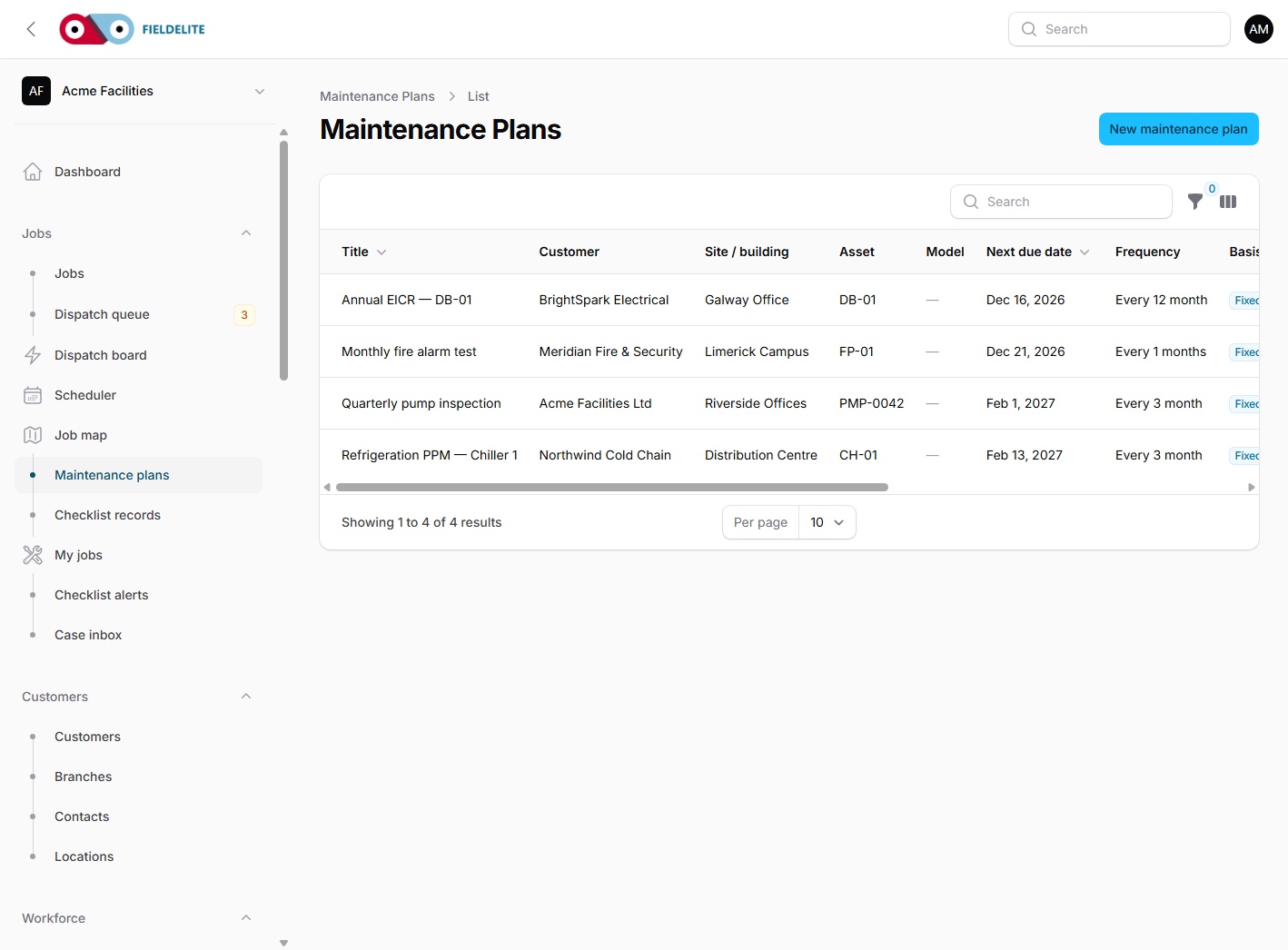
In the Meridian Fire & Security demo scenario, a monthly fire alarm test at Limerick Campus uncovers a delayed response in zone 3. The test, the defect, the panel manual, the follow-up quote and the invoice all need to point at the same site and the same panel.
The audit question
When a client, insurer or auditor asks about the test, the answer usually needs to cover:
- Was the test completed on the scheduled date?
- Who completed it, and were they competent to do so?
- Which panel and which zones were tested?
- What was the result, including any delayed or failed response?
- What defect was raised, who owns it and when will it be fixed?
- Was the relevant manual or method statement acknowledged before work?
A paper log book in a cupboard can answer some of that. A connected record answers all of it in one place.
Start with the recurring obligation
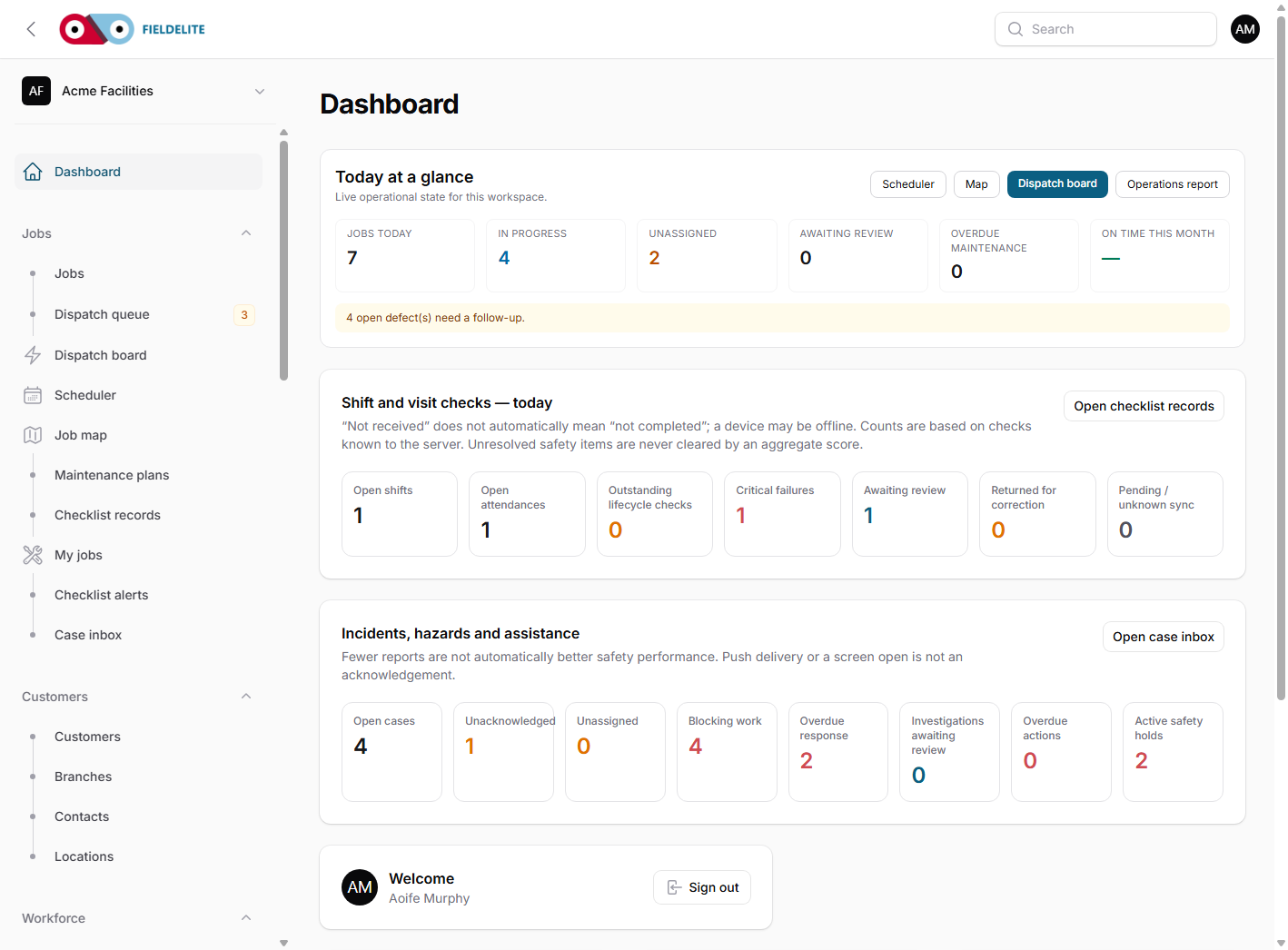
The demo includes a Monthly fire alarm test maintenance plan. The plan generates the next occurrence and puts it into the dispatch queue. The office can see what is due and what is overdue before the client calls.
The job itself carries the checklist, the form and the evidence. The engineer does not start from a blank sheet each month. The panel, the zones and the expected results are already part of the template.
Turn a finding into a defect
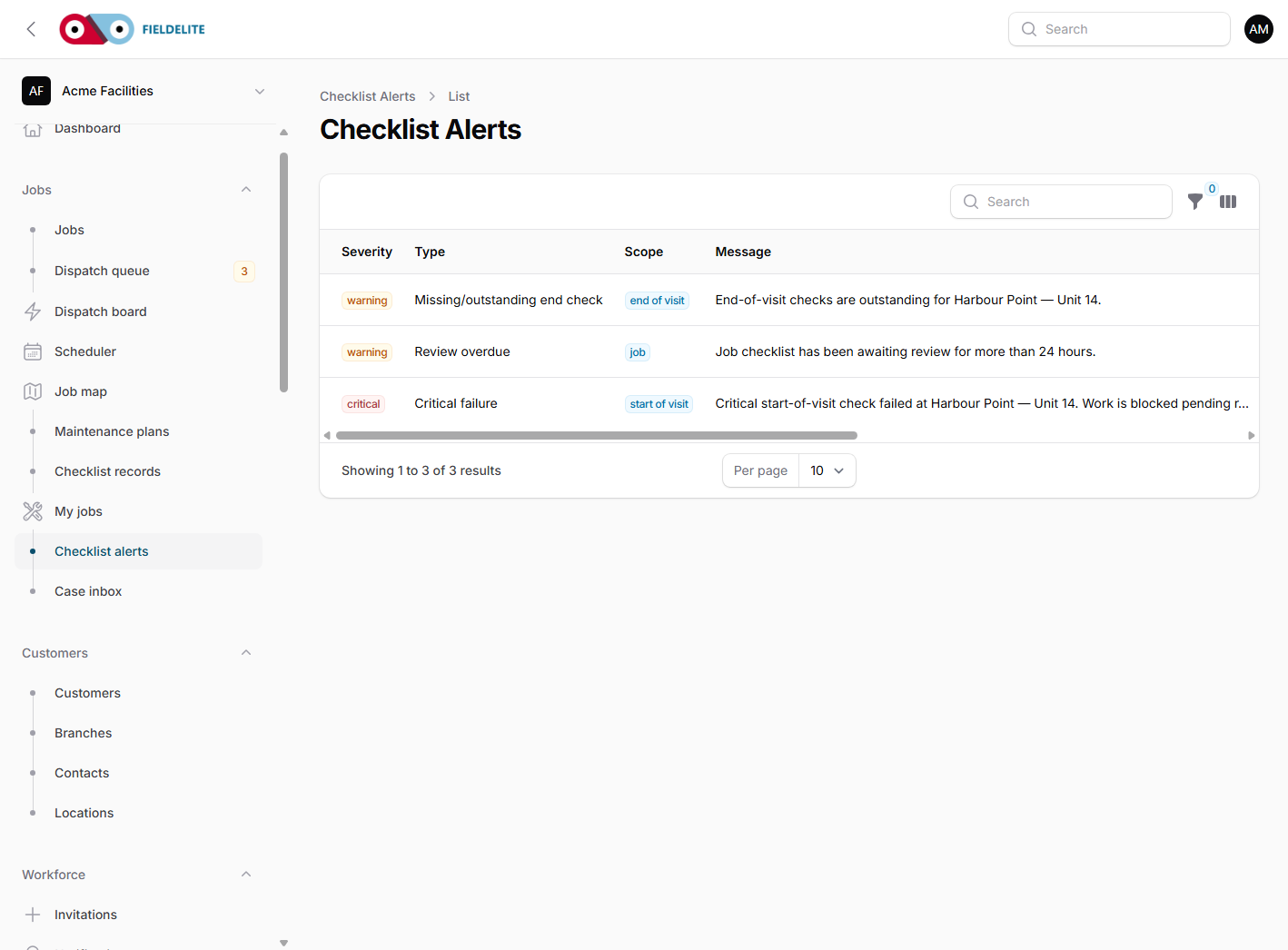
Zone 3 responds late. That is not a note in the margin. It is a defect with a severity, an asset and a follow-up owner.
Because the defect is linked to the panel and the site, the next engineer sees it. The client sees the status. The office can quote the panel upgrade without asking the engineer to describe the problem again.
The demo quote QTE0006 is accepted and becomes invoice INV0006. The commercial close is connected to the same job that found the fault.
Document acknowledgement
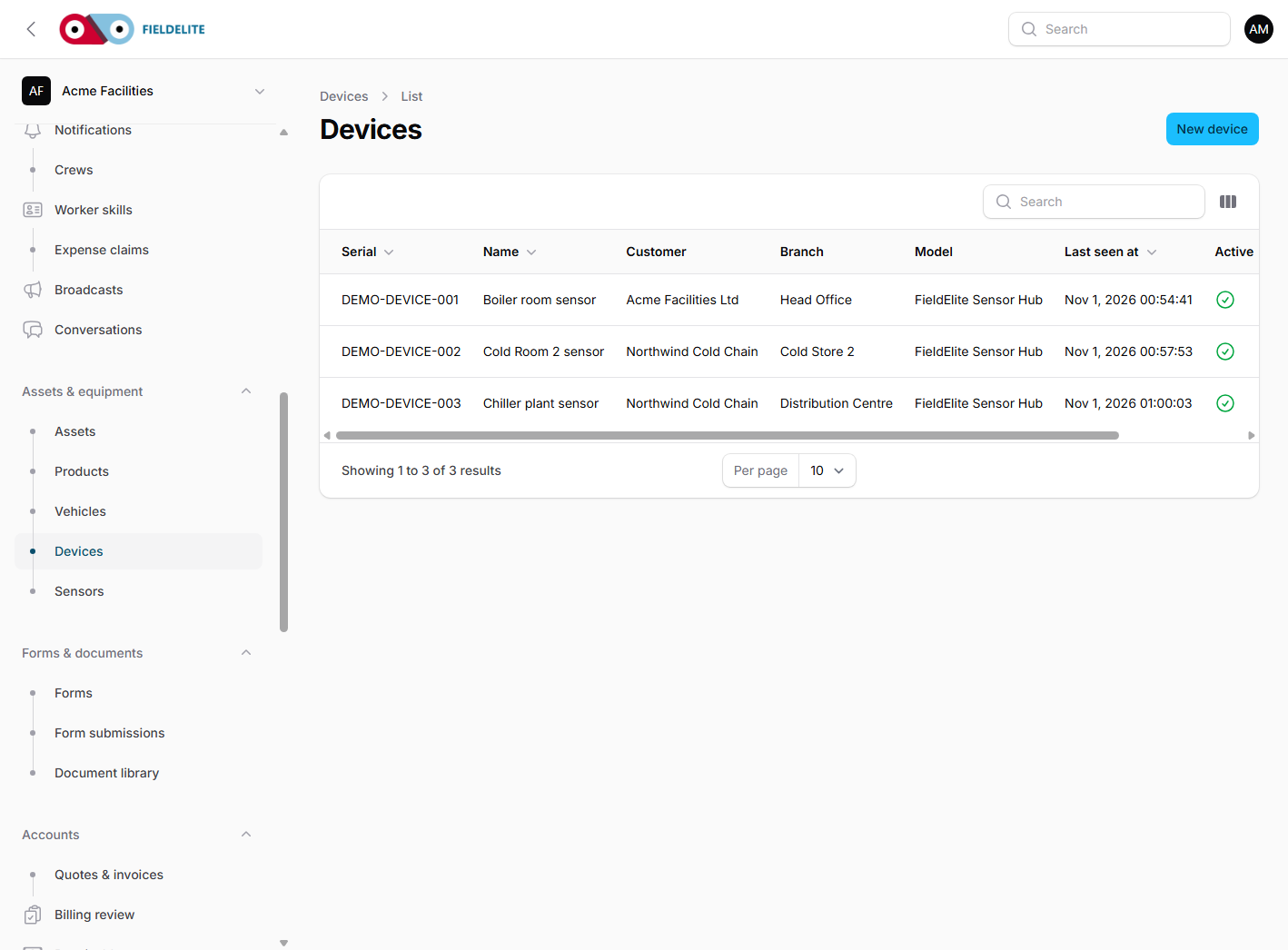
The panel manual is stored as a document linked to the asset. Where a document requires acknowledgement, the field engineer can confirm it was read before working on the equipment.
That is a small feature with a large audit benefit. It turns “we gave them the manual” into a dated record of who acknowledged it and when.
Keep the planned work visible
Fire and security contracts are full of recurring visits: monthly alarm tests, quarterly sprinkler services, annual extinguisher checks, emergency lighting tests. The dispatch queue should show the upcoming work alongside the reactive calls.
The demo shows the upcoming sprinkler service in the queue. That is the difference between a maintenance contract that runs itself and one that depends on someone remembering the calendar.
What to set up first
- Create one maintenance plan for the most important recurring test.
- Build the checklist and form around the panel and zone structure.
- Define defect severities and who owns follow-up.
- Attach the panel manual to the asset and require acknowledgement.
- Run one defect through to a quote and an invoice.
Plan fit
Preventive maintenance, checklists, scanning and the customer portal are included from Starter. Forms, customer notifications and more users join on Growth. Professional adds the dispatch board, SLA tracking, case management, the workflow engine, inventory, API access and branded documents. Enterprise adds data migration, custom integrations, SSO and PO or invoice billing.
Compare the plans, or start a 30-day trial and set up your first recurring test.
The Meridian Fire & Security scenario comes from the FieldElite demo workspace and is illustrative, not a real customer result.